

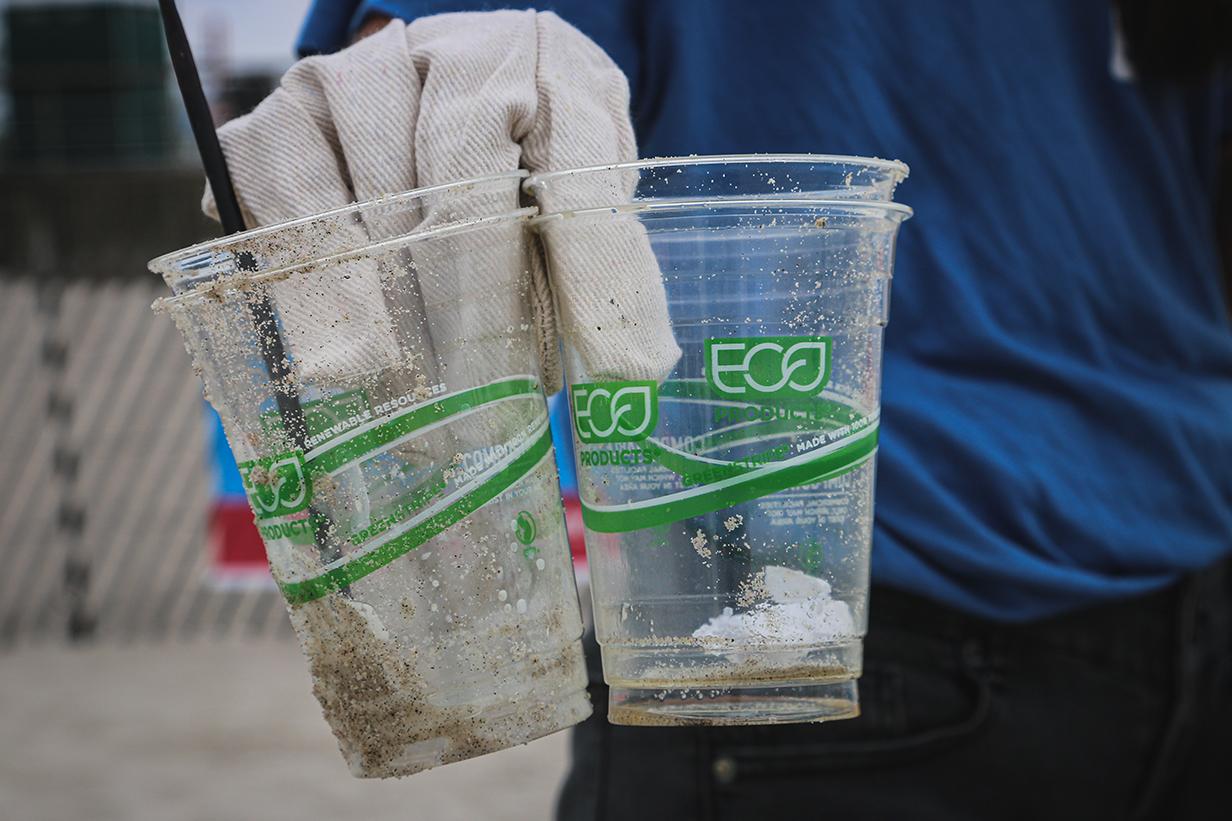
The compostable cup is one of the more confusing categories in the disposable economy. Marketed as the answer to disposable waste. Often more environmentally problematic than the plastic-lined cup it claims to replace. The disconnect between marketing claims and waste-system reality is the central problem.
This is what "compostable" actually means, why the cups mostly don't compost in UK conditions, and why the conversation should be reframed around reduction rather than substitution.
What Compostable Actually Means
A product is "compostable" if it breaks down into biological components under specified composting conditions, within a specified timeframe, without leaving toxic residues. The key phrase is "specified conditions."
Most compostable products certified to commercial standards require industrial composting, high temperatures, controlled moisture, mechanical agitation, sustained over weeks or months. These conditions don't exist in home compost bins, kerbside food waste systems in most UK local authorities, or landfills.
A compostable cup in a home compost bin sits there. A compostable cup in landfill sits there. A compostable cup in kerbside recycling contaminates the recycling stream and gets sent to landfill anyway.
Where the Cup Actually Goes
For most UK customers handling a compostable cup, the realistic end-of-life options are:
- Landfill. Where most compostable cups end up. The compostable material breaks down anaerobically in landfill, producing methane, a more potent greenhouse gas than CO2. The environmental case for compostable becomes worse than the plastic-lined alternative.
- Recycling contamination. Customers often place compostable cups in recycling bins. The compostable material isn't accepted in standard recycling streams, contaminates the stream, and reduces overall recycling effectiveness.
- Industrial compost (rarely). Where the venue has a contract with an industrial composter and the cup is collected separately, it can be composted properly. This is uncommon outside specialty venues with dedicated waste streams.
What the Marketing Implies
Compostable cup marketing typically implies the customer can throw the cup away with a clear conscience because it will "return to the earth." The implication is environmentally clean disposal. The reality is environmentally indistinguishable disposal in most contexts.
The compostable cup is, in operational terms for most customers, a disposable cup with better marketing.
The Reduction Reframe
The right conversation isn't whether the disposable cup is compostable, plastic-lined, paper-lined or bioplastic-lined. The right conversation is whether the cup is single-use at all.
Every disposable cup, of every material composition, generates more environmental impact than the reusable alternative across its lifecycle. The composition matters at the margin. The single-use nature matters structurally.
Reuse beats disposable by an order of magnitude on lifecycle impact, regardless of which disposable material is selected.
What Actually Reduces Cup Waste
Four interventions with measurable impact:
- Reusable cups. The structural solution. KeepCup products are tested to 1,000 uses.
- Café default-switching. Service language that makes reusable the default cup type.
- BYO incentives. Discounts that recognise the customer is taking responsibility for cup material.
- Disposable removal. Where cafés simply don't offer disposables, customer behaviour adapts.
None of these involves selecting a better disposable. All of them involve moving past the disposable category entirely.
Where Compostable Has a Role
Compostable does have legitimate use cases:
- Venues with dedicated industrial compost waste streams and clear customer signage.
- Closed-loop event environments where every cup is collected and processed together.
- Bridging products during the transition from disposable to reusable.
In all these contexts, the compostable cup is environmentally meaningful only if the waste-stream infrastructure exists to handle it. Without that infrastructure, the cup is functionally disposable with worse landfill performance.
The Wider Point
Compostable cup marketing is one of the more visible examples of a broader pattern: substitution within the disposable category rather than transition out of it. The disposable economy adapts to environmental pressure by offering compositional variants, compostable, plant-based, biodegradable, that maintain the disposable business model while addressing customer concern.
The reusable category is the actual alternative. The decision isn't "which disposable is least bad," it's "reusable or disposable."
FAQs
Do compostable cups compost in the UK?
Mostly no. Most compostable cups require industrial composting facilities that aren't accessible to most UK households or cafés. In landfill, they generate methane emissions; in recycling streams, they cause contamination.
Are compostable cups better than plastic-lined disposable cups?
Marginally and conditionally. Where industrial composting is genuinely available, compostable cups have a small environmental advantage. Where it isn't, the situation for most UK customers, the difference is negligible or worse.
What's the most effective way to reduce cup waste?
Switching to reusable cups. KeepCup products are tested to 1,000 uses and dramatically outperform any disposable alternative on lifecycle impact.
Where do compostable cups belong?
Venues with dedicated industrial compost waste streams, closed-loop events, and as bridging products during transitions to reusable. Outside these contexts, the environmental case is weak.
It's time to listen to the science
Our hopes and ambitions for the next decade