

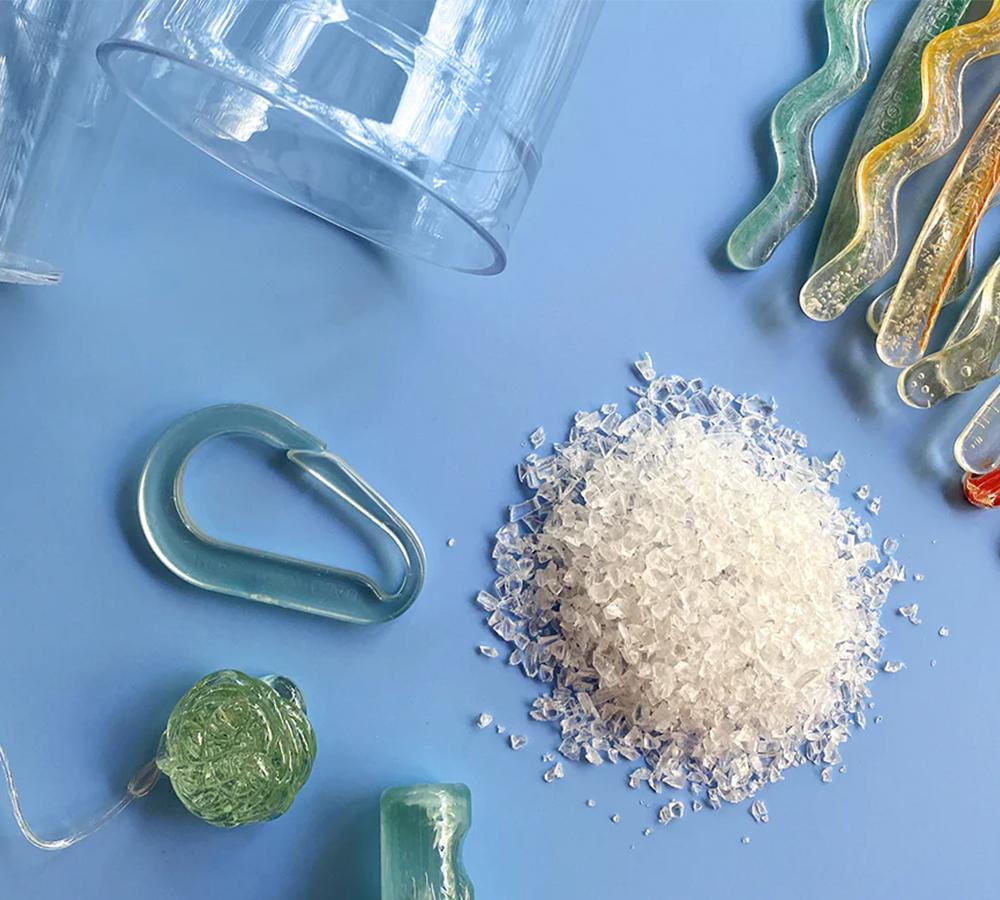
Tritan is one of the best materials for a clear reusable cup. It's also one of the hardest plastics to recycle. Those two facts sat alongside each other for eight years before we did anything about it.
This is what we did about it.
The Problem With Tritan
Our customers want to see their drink. Tritan Copolyester — the clear plastic used across our Cold Cup range — delivers that. BPA-free, tough, genuinely durable. But it sits under the #7 'Other' Plastics Identification Code, which means commercial recyclers don't take it. Too low in volume. Too rigid. Too hard for conventional waste streams to process.
For eight years, manufacturing waste, rejected parts, and customer returns accumulated. One tonne of it. Destined for landfill because the recycling infrastructure to handle it didn't exist at scale.
We needed a different approach.Precious Plastic Melbourne
We partnered with Precious Plastic Melbourne — a local workshop that specialises in processing plastics conventional recyclers won't touch — to find out whether Tritan could be granulated and extruded back through our own machinery.
The research and development phase covered material preparation, processing requirements, and safety considerations. Tritan required additional preparation post-granulation, and its hardness raised questions about wear on equipment at volume. But the findings were clear: with the right preparation and injection or extrusion methods, Tritan could be recycled while maintaining its clarity and rigidity.
The brief was specific. The results were definitive.
What Happened Next
Eight months of trials with our manufacturer. Our own tooling. Numerous iterations to get the clarity right.
The result: 100% recycled cups indistinguishable in quality from our standard production. The full tonne of accumulated Tritan waste — collected across eight years — granulated and processed into 11,000 reusable cups, now part of our Cold Cup range.
One tonne in. Eleven thousand cups out. Nothing to landfill.
Why It Matters Beyond the Numbers
The recycling infrastructure for plastics like Tritan doesn't exist at scale because the volume hasn't justified it. Projects like this one make the case that it should — and demonstrate what's possible when a manufacturer takes responsibility for its own waste stream rather than passing the problem downstream.
Circularity isn't a marketing position. It's a manufacturing decision. This is what it looks like in practice. We've sold out of this range for now, you can shop Cold Cup Original.
Why cheap reusables cost the earth
Does Lifecycle Analysis in Product Design Matter?