

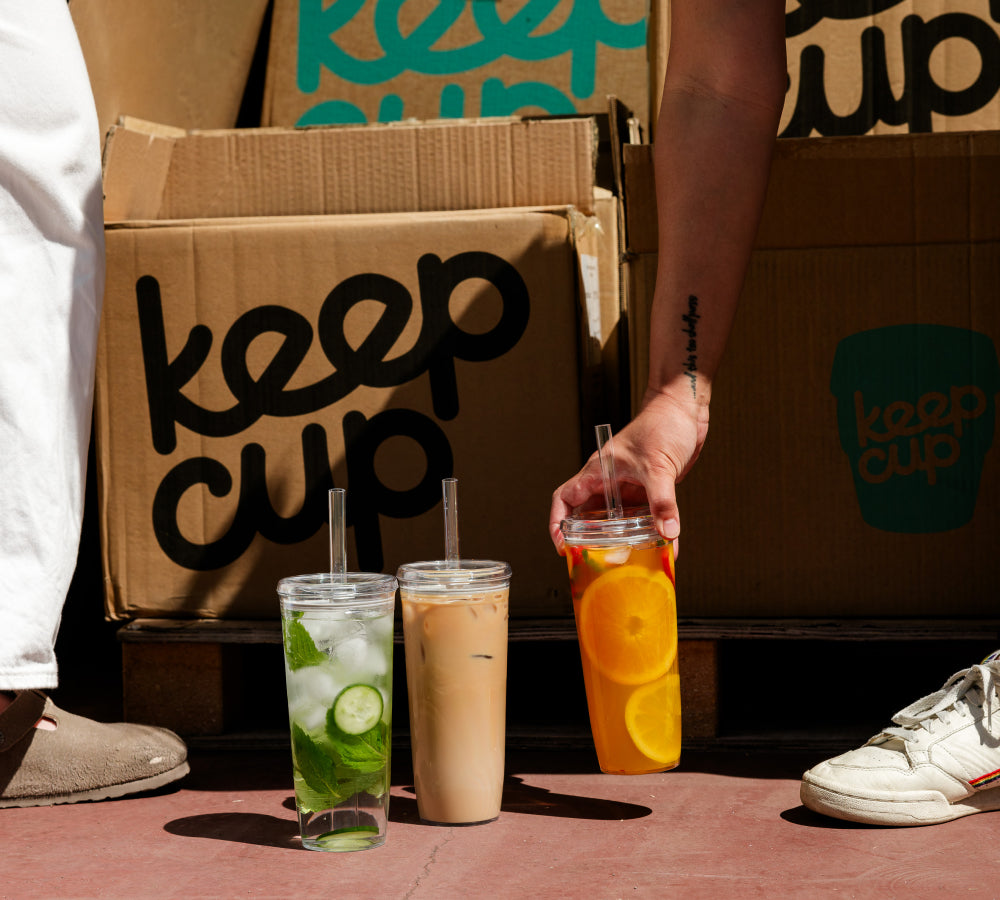
There's a lot more to KeepCup than the cup in your hand. Behind every product, shipment and component is a design decision, a material story, or an unexpected detail that doesn't make it onto the label.
We asked our team what they wish more people knew. Here's what came back.
1. We Turn Tennis Balls into Cup Bands
One tennis ball makes 12 cup bands. We take recovered tennis balls, sourced from tournaments in Portugal, grind them down, rebond the material, and press it into the cork bands on our Ace range. Forty million tennis balls go to landfill in the UK alone every year. The Ace range is making a dent.
Bonus: we also use defective moulded parts and warehouse rejects to make Cold Cup components. If the material is good, it goes back in.
2. Our Packaging Is Cardboard First, and Reused in Our Supply Chain
The soft strap in your parcel is reusable, not packaging waste. Keep it, repurpose it, or return it. The cardboard is the same, designed to move through our supply chain and be reused before it's recycled. Circularity starts before the product reaches you.
3. Modular Design Means Fewer New Products
Every lid in the Original, Brew, and Thermal ranges is interchangeable across sizes. Lose a lid, replace the lid, not the cup. Damage a seal, replace the seal. The modularity is a deliberate design choice that extends product life, reduces material use, and keeps your cup out of the bin.
It's also why KeepCup offers replacement parts. A cup that can be repaired is a cup that doesn't become waste.
4. Just 20 Uses Offsets the Production Footprint
Use a KeepCup Original 20 times and its production footprint is already lower than the equivalent number of disposable cups. The Brew Cork hits the same point at 24 uses. The Commuter Travel Mug at 66.
Most KeepCups are still in daily use at well over 1,000. The maths compound with every refill.
Use the Impact Calculator to run your own numbers >
5. We're Woman-Founded, Woman-Led, and Pay Equally
KeepCup was founded by Abigail and Jamie Forsyth in Melbourne in 2009. Abi remains Managing Director, and in 2026 was awarded the Medal of the Order of Australia for outstanding service to design. More than 50% of the global leadership team are women. Pay equality is policy, not aspiration.
6. We Have Two Homes: Melbourne and North London
Our Melbourne headquarters has solar panels on the roof and hives in the garden to support local biodiversity and pollination. Team members in full beekeeping suits collecting honey is a regular enough sight that it no longer surprises anyone in the office. It surprises everyone else.
We've also worked from a North London office since 2011, our base for the UK and European market. Two hemispheres, one team.
7. The Original Cup Was Made in a Café Kitchen
The first KeepCup prototype was made in 2008 by Abigail Forsyth, a café owner who was tired of watching good coffee go into disposable cups. She cut a plastic cup to barista-standard sizing and handed it across the counter. That was the brief. Everything since has been an iteration of the same idea: make the reusable better than the disposable, and people will choose it.
Sixteen years later, KeepCup is carried in over 65 countries. The brief hasn't changed.

SipCheck Returns to London Coffee Festival 2026 — Plus Two New Launches
The Ace Range Is Here — Limited Edition Cups Made From Tennis Ball Waste